Understanding Carbon Steel Plates: Grades, Properties & Industrial Applications

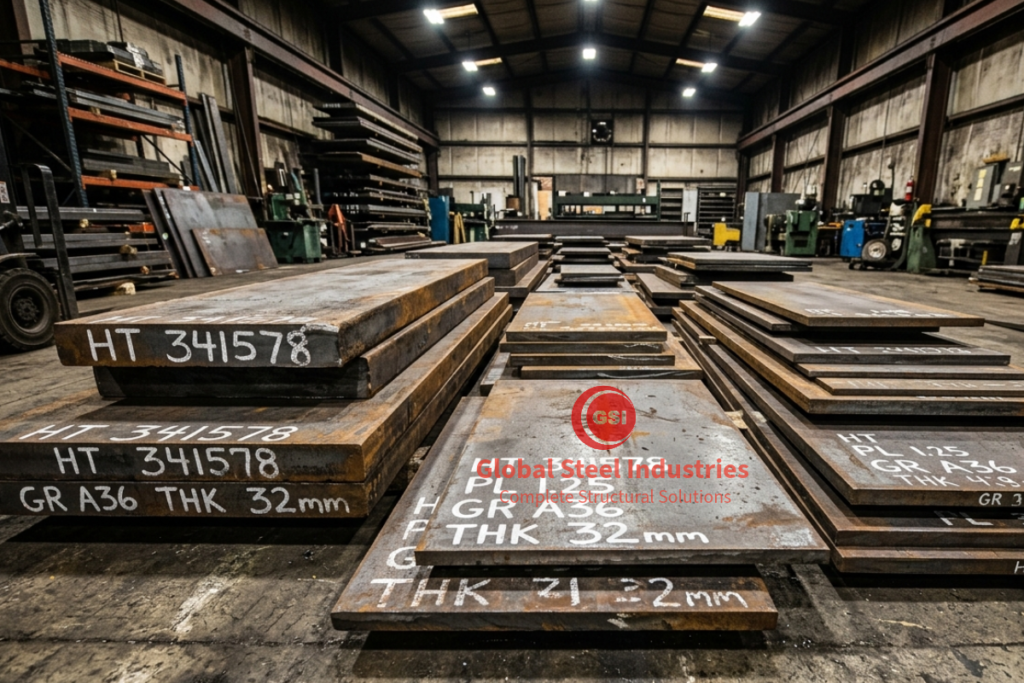
Carbon steel plates are among the most widely used structural and pressure-containing materials in the industrial world. Their excellent combination of strength, weldability, and cost-effectiveness has made them indispensable across construction, oil and gas, power generation, and heavy engineering. Global Steel Industries supplies a comprehensive range of carbon steel plates to clients worldwide, backed by over 20 years of industry experience and internationally recognized certifications.
Understanding Carbon Steel Plates: Grades, Properties & Industrial Applications
Carbon steel is an alloy of iron and carbon, typically containing between 0.05% and 2.0% carbon by weight. Unlike stainless steel, carbon steel does not contain significant amounts of alloying elements such as chromium or nickel. This simplicity of composition makes carbon steel highly versatile in manufacturing and relatively economical compared to specialty alloys. The carbon content directly influences the mechanical properties of the steel. Low-carbon steels (up to 0.30% carbon) are extremely ductile and weldable, making them ideal for structural applications. Medium-carbon steels (0.30–0.60% carbon) offer a balance of strength and ductility suitable for machinery components and pressure vessels. High-carbon steels (above 0.60% carbon) provide excellent hardness but reduced toughness.
Among the most frequently specified carbon steel plate grades in industrial applications are ASTM A36, known for its exceptional weldability and use in structural applications such as bridges and buildings. ASTM A516 Grade 60, 65, and 70 plates are the standards of choice for pressure vessels and boilers, offering excellent notch toughness at low temperatures. ASTM A283 is widely used in moderate-pressure applications including storage tanks and railway equipment. For higher temperature service, ASTM A285 provides reliable performance in unfired pressure vessels. Each grade has distinct chemical and mechanical specifications that must be matched carefully to the intended service conditions.
When selecting carbon steel plates for a specific application, engineers evaluate several key mechanical properties. Tensile strength determines the maximum load the plate can withstand before fracturing. Yield strength defines the stress level at which permanent deformation begins — critical for structural design calculations. Elongation and impact energy (measured through Charpy V-notch testing) indicate the plate’s ability to absorb sudden loads without brittle fracture. Hardness values guide machinability and wear resistance assessments. Global Steel Industries provides comprehensive mill test reports for every plate shipment, documenting all relevant mechanical and chemical properties for full traceability and compliance
The applications of carbon steel plates span virtually every major industrial sector. In construction and infrastructure, carbon steel plates form the webs and flanges of I-beams, the base plates of columns, and the wearing surfaces of heavy machinery. Shipbuilders rely on classification-society-approved carbon steel plates for hull construction and deck plating. Oil and gas operators specify carbon steel plates for storage tank shells, pressure vessel bodies, and pipeline support structures. Power plants use carbon steel plates in boiler drums, heat exchangers, and structural components. Mining operations depend on abrasion-resistant variants of carbon steel for chutes, hoppers, and dump truck bodies that endure constant mechanical punishment.
One of the primary advantages of carbon steel plates is their excellent fabricability. They can be cut by flame cutting, plasma cutting, and laser processes. They bend and form well in plate rolling and press brake operations. Welding is straightforward with common processes including SMAW, GMAW, FCAW, and SAW, though preheat requirements increase with higher carbon content and heavier section thickness. For critical applications such as pressure vessels, post-weld heat treatment (PWHT) may be required to relieve residual stresses and restore mechanical properties in the heat-affected zone. Global Steel Industries’ technical team can advise on fabrication requirements for every grade we supply

Carbon steel plates from Global Steel Industries deliver consistent quality, reliable mechanical performance, and full compliance with international standards including ASTM/ASME and EN-DIN. Our export-ready supply capability ensures prompt delivery to your project site, wherever it is located. Contact us today at globalsteelind.com for pricing and availability. click here 

Ready to source premium steel? Contact Global Steel Industries at globalsteelind.com or call 9324799893 / 9920397998

Scroll to Top