The Future of Green Steel: Sustainable Production & Global Trends
The steel industry is one of the world’s largest industrial sources of CO₂ emissions — responsible for approximately 7–9% of global greenhouse gas output. As climate commitments intensify and carbon border taxes emerge, the race to produce ‘green steel’ has become one of the defining industrial challenges of the 21st century. This article explores what green steel is, how it is made, and what it means for global markets.
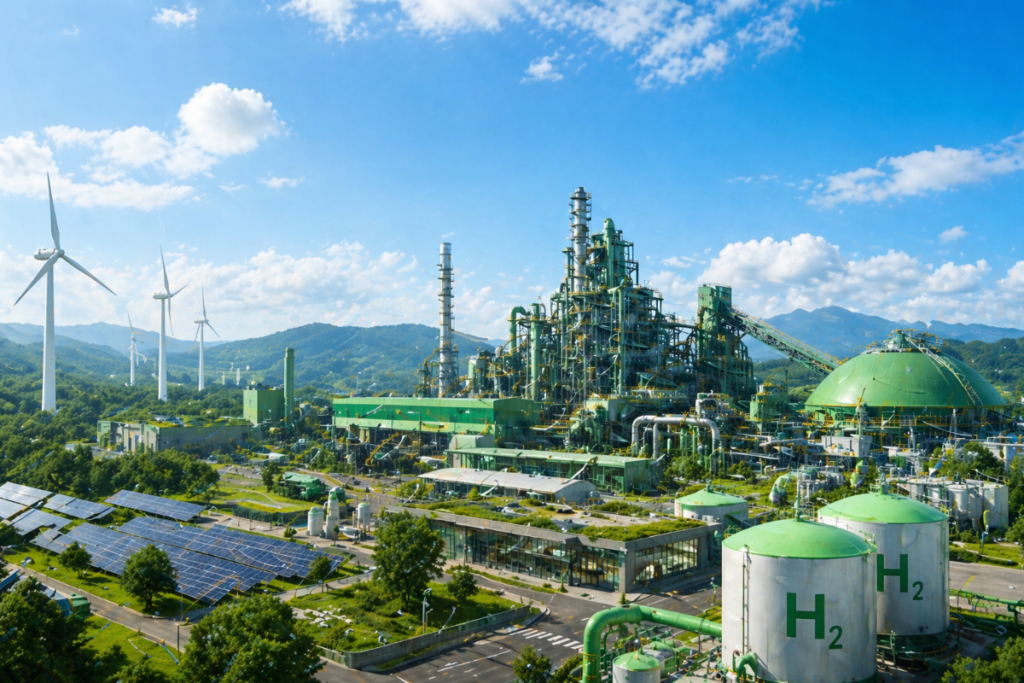
- Why Steel Has a Carbon Problem
Traditional steelmaking uses blast furnaces fired with metallurgical coking coal to reduce iron ore to pig iron. This process — called the integrated blast furnace-basic oxygen furnace (BF-BOF) route — emits approximately 1.85 tonnes of CO₂ per tonne of steel produced. With global steel production exceeding 1.9 billion tonnes per year, the steel industry contributes roughly 3.5 billion tonnes of CO₂ annually. Decarbonizing steel is therefore a critical priority for meeting Paris Agreement targets.
- What Is Green Steel?
Green steel is steel produced with significantly reduced or near-zero carbon emissions. There is no universally agreed definition, but industry bodies are converging on a threshold of less than 0.4 tonne of CO₂ per tonne of steel (compared to the BF-BOF average of 1.85t). Green steel can be produced through several pathways: hydrogen-based direct reduction (H-DRI), electric arc furnace (EAF) using renewable electricity, carbon capture and storage (CCS) applied to conventional routes, and biomass-based ironmaking.
- Hydrogen-Based Steelmaking
The most promising pathway for deep decarbonization is replacing coking coal with green hydrogen (H₂ produced from renewable electrolysis) in the direct reduction of iron ore. In this process, hydrogen reacts with iron ore pellets in a shaft furnace to produce direct reduced iron (DRI) — the only by-product being water vapor. The DRI is then melted in an electric arc furnace powered by renewable electricity to produce steel. Swedish steelmaker SSAB produced the world’s first fossil-free steel using this process in 2021 via its HYBRIT project.
- Electric Arc Furnace (EAF) and Scrap Recycling
The EAF route uses electrical energy to melt scrap steel, producing steel with roughly 0.4–0.5t CO₂/t of steel when powered by the average grid — and potentially near-zero when powered by renewable electricity. This route already accounts for about 30% of global steel production. Increasing the use of EAF with renewable power and high-quality scrap is one of the fastest near-term decarbonization levers. However, scrap availability and quality are constraints on scaling this route
- Global Green Steel Initiatives
Several major developments are reshaping the global green steel landscape: The EU Carbon Border Adjustment Mechanism (CBAM) is applying carbon costs to steel imports, incentivizing low-carbon production. Germany’s ThyssenKrupp is converting blast furnaces to hydrogen-ready DRI. ArcelorMittal has committed to 30% CO₂ reduction by 2030. Australia is developing large green hydrogen export hubs to supply Asian steel mills. India’s National Steel Policy targets carbon neutrality with investments in EAF capacity and hydrogen trials. Major automotive and construction companies are signing green steel offtake agreements, creating demand-side pull.
- Implications for India's Steel Industry
India is the world’s second-largest steel producer, with over 90% of production from the carbon-intensive BF-BOF route. India faces both an opportunity and a challenge: the opportunity to leapfrog to green steel technologies, attract premium green steel markets, and export green hydrogen — but the challenge of transitioning without compromising cost competitiveness or economic growth. Policy support, renewable energy cost reductions, and technology partnerships will be critical to India’s green steel transition.
- Conclusion
Green steel is no longer a distant aspiration — it is rapidly becoming a commercial reality driven by policy mandates, customer demand, and falling renewable energy costs. Steel producers that invest in low-carbon technology today will gain competitive advantage as carbon costs rise globally. Global Steel Industries is committed to sustainable sourcing and supports customers seeking low-carbon steel supply chains. Contact us to discuss certified material sourcing and traceability for your green building or sustainability-focused project.
Ready to source premium steel? Contact Global Steel Industries at globalsteelind.com or call 9324799893 / 9920397998