
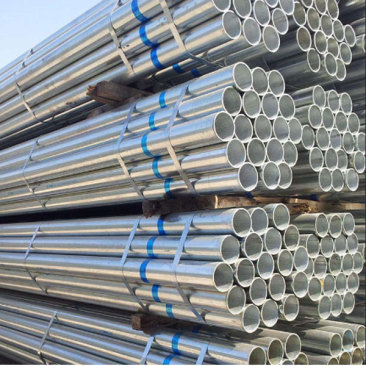
Hot Dipped Galvanized Steel Pipe
- Email : info@global-steel.net
- Contact : 9324799893 / 9920397998
| Specification | Details |
|---|---|
| Product Name | Galvanized Steel Pipe |
| Pipe End | Plain End |
| Pipe Length | 3 meters – 12 meters |
| Outside Diameter | 1/2 inch ~ 8 inch |
| Pipe Fittings | Threaded, Coupling, Caps, Flange, etc. |
| Materials | Q195, Q235, Q235B, St37-2, St52, SS400, STK500, ASTM A53, S235JR |
| Standard | GB/T3091, ASTM A53, JIS G 3444, BS 1387 |
| Surface | Galvanized |
| Zinc Coating | More than 60g/m² – 600g/m² |
Types of galvanizing process for plumbing pipes:
There are many different types of galvanizing processes depending on the desired outcome or properties of the finished product.
The most popular methods include hot-dip galvanizing, electroplating, mechanical electroplating, and plastic coating.
Hot-dip galvanizing is currently considered one of the best methods of galvanizing steel pipe due to its durability and corrosion resistance.
The method involves immersing the metal in a bath of molten zinc at 450 degrees Fahrenheit.
The process is complete when the steel pipe (or EN (European Standard) or ASTM (American Society for Testing and Materials))
standard material is coated with approximately 30 to 40 microns of pure zinc.
Electroplating is another popular method of galvanizing steel pipes because of its high-quality finish and relatively inexpensive cost
compared to other methods such as hot-dip galvanizing.
Electroplating uses an electric current to deposit a thin layer of chromium, nickel or zinc on an existing metal surface.
Mechanical plating, also known as mechanical polishing, is a low-cost alternative that involves adding a thin layer of zinc using a sandblasting (shot peening) method.
This type of galvanizing process is less popular due to its lower surface quality and its tendency to flake or peel.
Plastic coatingis the least used method of galvanized steel pipe due to its limited functionality and poor corrosion resistance.
Application of galvanized steel pipe:
After galvanizing, these metal pipes can be used in many different applications such as: water pipes, gas pipes, chemical pipes, sanitary pipes,
HVAC pipes and industrial pipes.
They are often used in building construction and water system development because they are very durable and last longer
other types of pipe such as PVC (polyvinyl chloride)
or copper pipe.Common applications for galvanized steel pipe are water and gas systems in building structures.
Because steel pipe is corrosion resistant, it’s ideal for plumbing and HVAC (heating, ventilation, and air conditioning) applications that require durability.
They also make excellent chemical piping, as they withstand high levels of corrosion and rust better than other types of piping.
Benefits of using galvanized steel pipe:
There are many benefits to using galvanized steel pipe, such as excellent corrosion resistance, lower cost compared to other materials
such as PVC (polyvinyl chloride) or copper,
high durability and strength, and efficient heat transfer properties. Since they do not corrode or rust easily,
these metal pipes can be used in both indoor and outdoor applications. They’re lightweight, easy to install,
and flexible enough to get around corners with ease,
yet strong enough to resist knocks from earthquakes or extreme weather conditions.