High-Speed Steel & Tool Steel: What Industry Needs to Know
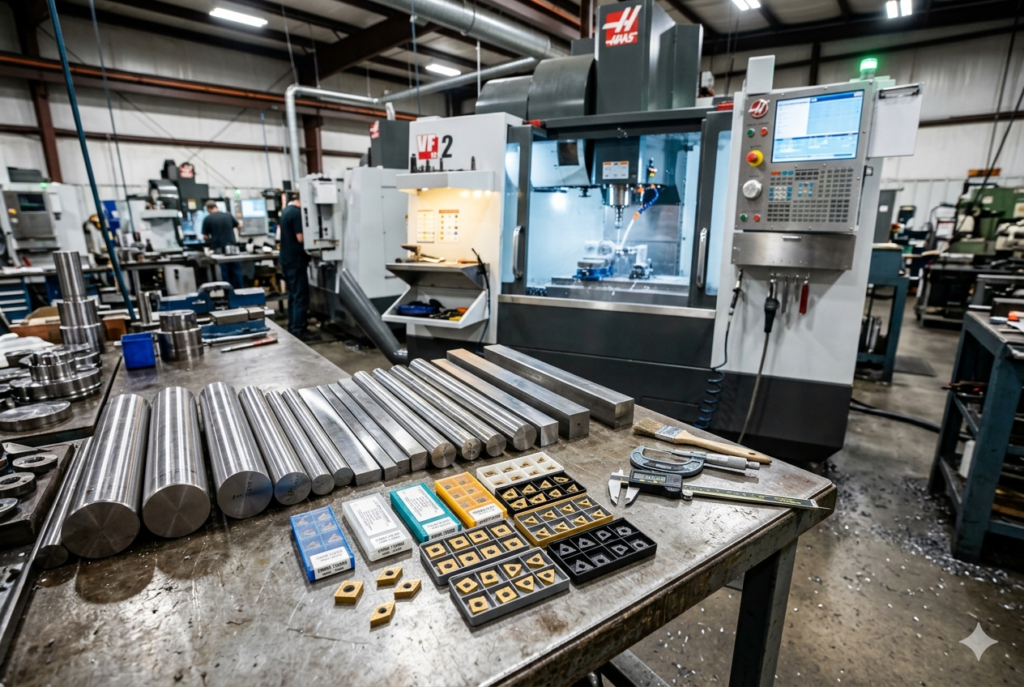
High Speed Steel is a high-performance tool steel designed to maintain hardness, wear resistance and cutting performance at elevated temperatures tool steels are specialty alloy steels engineered to perform cutting, forming, and shaping operations on other materials. They must maintain hardness and wear resistance at the cutting edge, resist shock and impact loads, and retain these properties at the elevated temperatures generated during high-speed machining. High-speed steels (HSS) represent the most sophisticated category of tool steels, capable of cutting at speeds and temperatures that would destroy conventional carbon steel tooling. Global Steel Industries supplies tool steel bars, rods, and plates in a comprehensive range of grades for toolmaking and precision engineering applications.
Tool steels are classified by AISI/SAE designations into several families based on their primary alloying elements and intended applications. W-series (water-hardening) tool steels are the simplest and most economical, used for low-speed cutting tools and hand tools. O-series (oil-hardening) and A-series (air-hardening) cold-work tool steels offer improved dimensional stability during heat treatment, reducing distortion in complex die shapes.
D-series (high-carbon, high-chromium) cold-work die steels, particularly D2 with 1.5% C and 12% Cr, are extensively used for blanking dies, cold forming dies, and punches where wear resistance is the dominant performance requirement. H-series hot-work die steels, including the widely specified H13 (5% Cr, 1.3% Mo, 1% V), are used for hot forging dies, aluminum die casting dies, and extrusion tooling where resistance to thermal fatigue and heat checking is critical.
High-speed steels are the pinnacle of conventional tool steel technology. Developed in the early 20th century, they derived their name from their ability to cut at “high speeds” that caused the tool to glow red-hot — conditions that immediately destroyed all earlier tool steel grades. The secret is their red hardness — the ability to retain hardness at temperatures up to 550–600°C through complex carbide phases formed by their high alloying element content.
Grade M2 (6% W, 5% Mo, 4% Cr, 2% V) is the dominant high-speed steel grade globally, accounting for the majority of HSS drill bits, end mills, taps, reamers, and gear cutting tools. Its balanced combination of hardness (HRC 62–65 after heat treatment), toughness, and cost-effectiveness makes it the rational first choice for general-purpose cutting tools. Grade M42 with cobalt addition further elevates red hardness for the most demanding cutting applications on hardened steels.
The full performance potential of tool steels is only realized through precise heat treatment. The standard sequence for hardening consists of slow preheating to equalize temperature through the section, followed by rapid heating to the hardening temperature, brief hold to dissolve carbides, and quenching to form martensite. Tempering immediately follows quenching to relieve brittleness and develop the final hardness and toughness balance.
For high-speed steels, the hardening temperature is high (1200–1280°C), with quenching in salt bath, oil, or gas depending on the section size. Multiple tempering cycles (typically two or three) are required to convert retained austenite to martensite and ensure dimensional stability. Precise temperature control throughout this sequence is essential — a deviation of even 10°C can significantly affect final hardness and carbide distribution
Tool steel selection depends on the specific demands of the application: what is being cut or formed, at what speed and feed, and whether shock resistance or wear resistance is the primary concern. Cutting tools for hard steel workpieces require higher wear resistance — M42 HSS or cemented carbide. Punching and blanking dies cutting high-strength material benefit from the toughness of A2 rather than the maximum wear resistance of D2. Hot forging dies require H13’s thermal fatigue resistance rather than cold-work die toughness.
Global Steel Industries supplies tool steel bar and plate in annealed (soft) condition for machining and die sinking, along with technical guidance on grade selection and heat treatment requirements for specific applications.
Tool steels are the enablers of precision manufacturing — the materials from which the tools that make all other products are fabricated. Global Steel Industries supplies a comprehensive range of tool steel grades with full material traceability. Contact our team at globalsteelind.com for specifications and competitive pricing.
Ready to source premium steel? Contact Global Steel Industries at globalsteelind.com or call 9324799893 / 9920397998