Pressure Vessel Steel Plates: Grades, Testing & International Standards
Pressure vessels are among the most safety-critical fabrications in the industrial world. A failure in a pressure vessel operating at elevated pressure and temperature can be catastrophic — releasing stored energy, flammable hydrocarbons, or toxic chemicals with devastating consequences. The foundation of every safe pressure vessel is the quality of the steel plate from which it is fabricated. Global Steel Industries supplies pressure vessel quality (PVQ) steel plates to fabricators and end-users across the globe, backed by complete documentation and rigorous quality assurance.
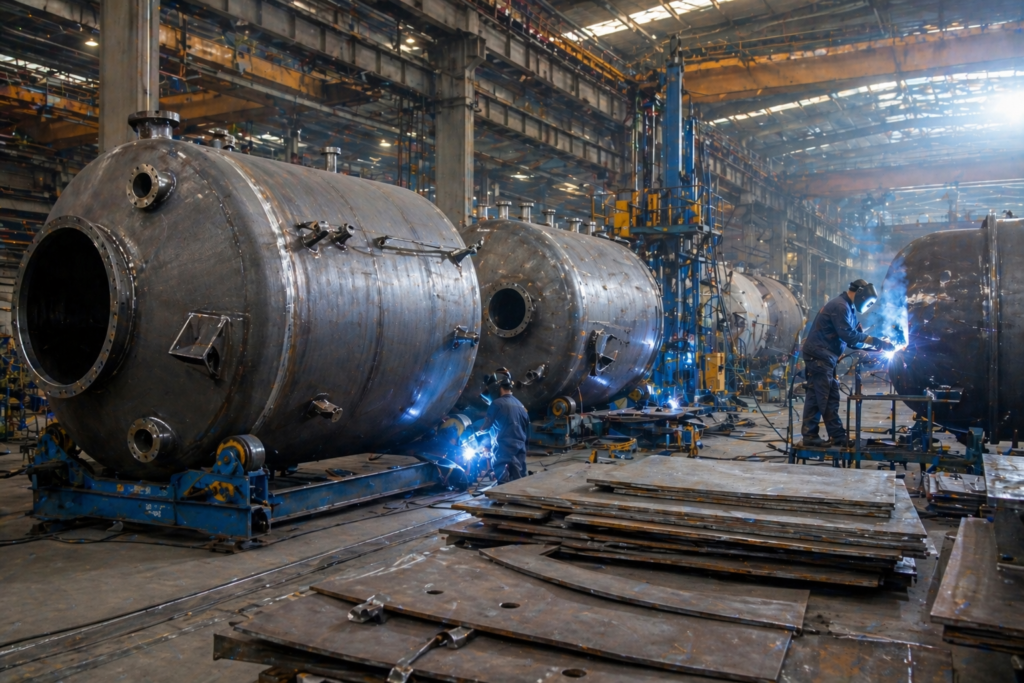
- What Makes a Steel Plate 'Pressure Vessel Quality'
Pressure vessel quality plates differ from standard structural plates in several important respects. First, they are produced to tighter chemical composition limits, particularly with respect to carbon, sulphur, phosphorus, and hydrogen content. Low hydrogen content is essential to prevent hydrogen-induced cracking (HIC) in thick-section plates. Controlled sulphur content minimizes sulfide inclusions that can initiate laminar tearing.
Second, PVQ plates undergo more extensive mechanical testing, including tensile testing at elevated temperatures for high-temperature service grades, and Charpy V-notch impact testing at design minimum temperatures for low-temperature grades. Third, ultrasonic examination of the full plate area is performed for thick plates or when specified by the purchase order, ensuring freedom from internal laminations and inclusions.
- Key ASTM Pressure Vessel Plate Grades
ASTM A516 is the workhorse of the pressure vessel industry, covering carbon steel plates for moderate and lower-temperature service. Grades 55, 60, 65, and 70 designate the minimum tensile strength in ksi, with Grade 70 being the most commonly specified for general-purpose pressure vessels and heat exchangers. The standard requires normalized or as-rolled plates with good notch toughness and weldability.
ASTM A515 covers similar plates for intermediate and higher-temperature service, with slightly higher carbon content for improved elevated-temperature strength. ASTM A537 Class 1 and Class 2 provide quenched-and-tempered plates with improved low-temperature toughness for cryogenic and low-temperature pressure vessels. For hydrogen service vessels, ASTM A516 with HIC testing per NACE TM0284 is frequently specified to prevent hydrogen-induced cracking damage.
- ASME Boiler and Pressure Vessel Code (BPVC)
The ASME Boiler and Pressure Vessel Code (BPVC) is the definitive standard governing pressure vessel design, fabrication, and inspection in the USA and most international markets. Section II of the ASME BPVC lists approved materials for pressure vessel construction — SA-prefix grades (e.g., SA-516 Grade 70) are essentially identical to their ASTM counterparts but procured to ASME requirements. Section VIII, Division 1 covers unfired pressure vessels for industrial service, while Division 2 permits higher design stresses with more rigorous fabrication and inspection requirements.
Fabricators stamping vessels with the ASME ‘U’ symbol are required to use ASME-approved materials, maintain certified quality management systems, and submit to periodic audits. Global Steel Industries supplies SA-certified plates with the documentation required by ASME-accredited fabricators.
- European PED and EN Standards
European pressure equipment is governed by the Pressure Equipment Directive (PED) 2014/68/EU, which requires materials to conform to harmonized European standards. Plates for European pressure vessels are supplied to EN 10028 — a series covering flat products for pressure purposes in carbon manganese, alloy, and stainless steel grades. Commonly specified grades include P265GH, P355GH (high temperature service), and P355NL1/NL2 (low temperature service with guaranteed notch toughness).
Global Steel Industries supplies EN 10028 certified plates for clients in European and Middle Eastern markets where PED compliance is required, along with EN 10204 3.1 material test certificates as standard.
- Conclusion
Pressure vessel fabricators demand and deserve steel plates with verifiable chemical and mechanical properties, full traceability to the originating heat, and documentation that satisfies design code requirements. Global Steel Industries delivers all of this — every order. Visit globalsteelind.com to discuss your pressure vessel plate requirements.
Ready to source premium steel? Contact Global Steel Industries at globalsteelind.com or call 9324799893 / 9920397998