
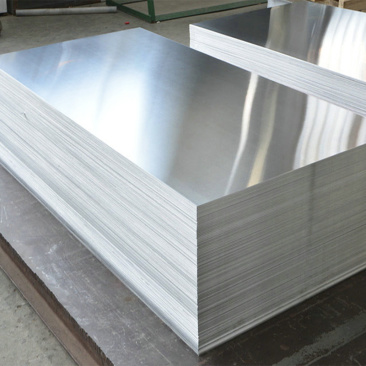
316/316L Stainless steel platel
Austenitic stainless steel balls with higher corrosion resistance than AISI 304 balls. They show good toughness. AISI 316L has a lower carbon content (maximum 0,030%). Balls are provided in the passivated condition. Special bearings, pumps and valves, aerosol and dispenser sprayers. Utilised in the foodstuff, paper, chemical, rubber, military
- Email : info@global-steel.net
- Contact : 9324799893 / 9920397998
Product information
The Difference Between 316 and 316L Stainless Steel
The difference between 316 and 316L stainless steel is that 316L has a .03 max carbon and is good for welding whereas 316 has a mid range level of carbon.
316 and 316L are austenitic alloys, meaning that these stainless steel products gain corrosion resistance from use of a nonmagnetic solid solution of ferric carbide or carbon in iron in the manufacturing process.
In addition to chromium and nickel, these alloys contain molybdenum, which also makes them more corrosion resistant. Even greater corrosion resistance is delivered by 317L, in which molybdenum content increases to 3 to 4% from the 2 to 3% found in 316 and 316L.
Properties and Uses of 316 and 316L Stainless Steel
These alloys are known for their excellent welding properties, joined by both fusion and resistance processes. The 316L low carbon version is preferred in corrosive environments. It is important to make sure that copper and zinc do not become contaminants at the site of welds, as this can create cracking.
It is common to fabricate 316 and 316L into many different shapes. They may be formed on equipment similar to carbon steel, and are readily blanked and pierced. Excellent malleability means they perform well in deep drawing, spinning, stretching and bending.
Technical data
Mechanical properties
| Type | UTS | Yield | Elongation | Hardness | Comparable DIN number | |
| N/mm | N/mm | % | HRB | wrought | cast | |
| 304 | 600 | 210 | 60 | 80 | 1.4301 | 1.4308 |
| 304L | 530 | 200 | 50 | 70 | 1.4306 | 1.4552 |
| 316 | 560 | 210 | 60 | 78 | 1.4401 | 1.4408 |
| 316L | 530 | 200 | 50 | 75 | 1.4406 | 1.4581 |
Chemical Composition
AISI 316 (1.4401) | AISI 316L (1.4404) | AISI 316LN (1.4406) | |
Cr (Chromium) | 16.5 – 18.5 % | 16.5 – 18.5 % | 16.5 – 18.5 % |
Ni (Nickel) | 10 – 13 % | 10 – 13 % | 10 – 12.5 % |
Mn (Manganese) | <= 2 % | <= 2 % | <= 2 % |
Mo (Molybdenum) | 2 – 2.5 % | 2 – 2.5 % | 2 – 2.5 % |
Si (Silicon) | <= 1 % | <= 1 % | <= 1 % |
N (Nitrogen) | 0.11 % | 0.11 % | 0.12-0.22 % |
P (Phosphorus) | 0.045 % | 0.045 % | 0.045 % |
C (Carbon) | <= 0.07 % | <= 0.03 % | <= 0.03 % |
S (Sulphur) | 0.03 % | 0.02 % | 0.015 % |
Among all steels,austenitic stainless steel has the lowest yield point.Therefore,considering the mechanical properties, austenitic stainless steel is not the best material for the stem, because to ensure a certain strength, the diameter of the stem will increase. Yield point can not be improved by heat treatment,but can be improved by cold forming.
| ASTM | JIS | AISI | EN | Mill’s Standard | |
| Grade | S30100 S30400 S30403 S31008 S31603 S32100 S41008 S43000 S43932 S44400 S44500 | SUS301 SUS304 SUS304L SUS310S – SUS321 SUS410S SUS430 – SUS444 SUS430J1L | 301 304 304L 310S 316L 321 410S 430 – 444 – | 1.4310 1.4301 1.4307 1.4845 1.4404 1.4541 – 1.4016 1.4510 1.4521 – | 201 202 204Cu3 |